Designing and building deadlinklabs.com with AI, in public
Jul 14, 2026
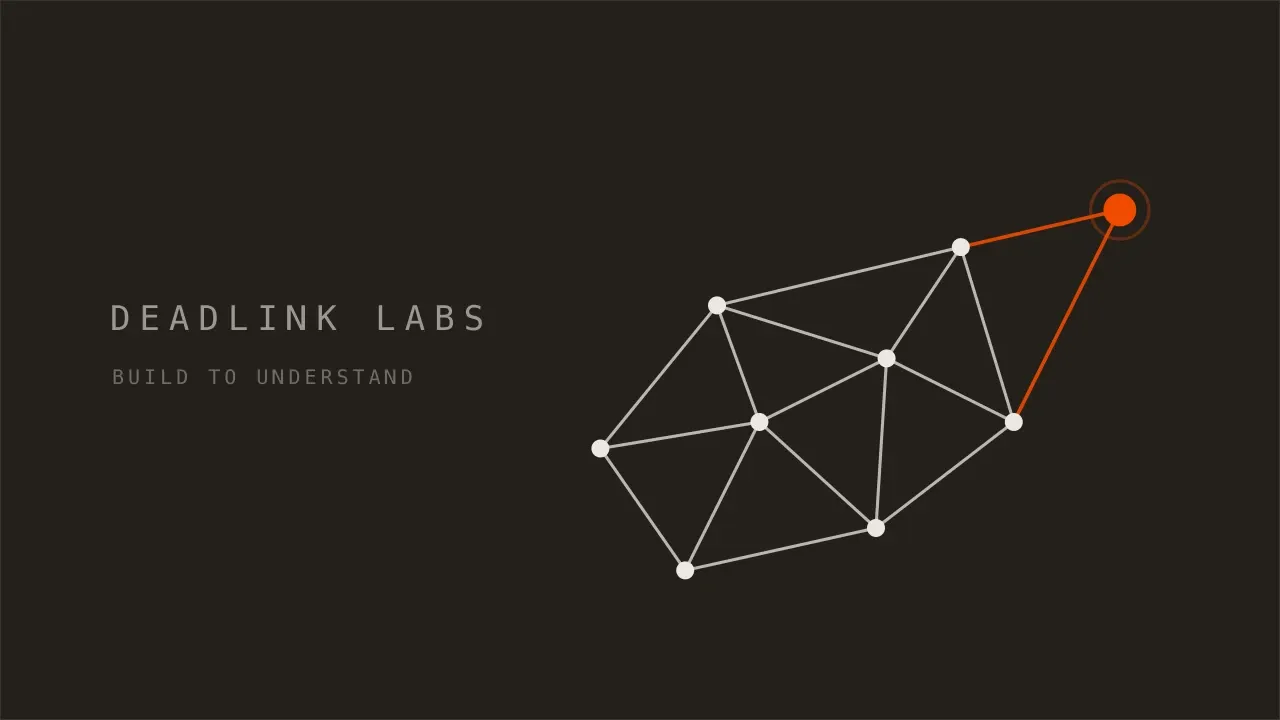
For thirty years I built things and had no link to send when someone asked to see the work. Post-production pipelines, home automation, dashboards, music tools, the occasional website. The work was real. The URL did not exist. I was the dead link.
This is the fix, and this post is the first entry in it. Deadlink Labs is a lab notebook I build in public. The first experiment is the notebook itself: design this site, build it, and write down every decision while the camera runs. It is live now, which is the short answer: yes, you can design and ship your own site with AI, in public. This post is the long answer.
What follows is the short version, the decisions and the reasons. The full step by step is on video, linked at the bottom.
Think first, then prompt
The easy mistake is to open an AI coding tool and ask it for a website. You get generic output because you handed it a generic request. So I did the opposite. I spent the expensive part, the thinking, up front.
The plan branched into three documents, all growing from one idea.
- The premise is why the site exists at all.
- The blueprint is how it should look and feel.
- The structure is how it works: the pages, the content model, the rules.
I drafted each one myself first, on paper and in an Obsidian canvas, then argued it out with AI to sharpen the edges. Never the other way around. Bring your own idea first, then pressure-test it against the machine. Do it backwards and you end up with cookie-cutter slop that could belong to anyone.
A design lesson landed here too. I iterated the whole look inside a design tool before a single line of the site existed. A layout change there costs one prompt. That same change after the site is built can cost an afternoon. So iterate where iteration is cheap.
Then all three documents got reconciled into one file, CLAUDE.md, the brief
for the entire project. Blueprint, design decisions, structure, voice rules, even
how I number my commits, in a single source of truth. When the AI has a
question, that file answers it. The quality of what you build comes straight from
the quality of that file. One clear brief beats a hundred small corrections
later.
The stack, and why
This is a content archive, not an app, so the stack is chosen to disappear.
Astro builds the site and ships zero JavaScript by default. The pages are plain, fast HTML. Nothing loads to perform at the reader. The work is the point, not the interface, and Astro lets the interface get out of the way.
TypeScript catches type mistakes before they become bugs. Tailwind keeps styling in the markup, so there is no separate stylesheet to hunt through. Motion is CSS-first, no animation library riding along, which keeps the promise of shipping almost no JavaScript honest.
Where it lives
Three services, each doing one job.
GitHub holds the code and every snapshot of it. I set up version control before the first real line of code, so nothing built from that point on can be lost. The commit history doubles as the changelog: every message starts with a version number, so anyone can read the log and watch the site grow one version at a time.
Vercel builds and hosts. It connects straight to the GitHub repo, detects that it is an Astro project, and deploys it. No servers, no build settings to configure. Cloudflare runs the DNS and points the real domain at Vercel.
That version numbering has one rule I like. A leading zero means “still in development.” A leading one means “live and confirmed online.” The moment deadlinklabs.com resolved in a clean browser tab, that zero became a one.
The content backend
There is no CMS, on purpose. I already write everything in Obsidian: notes, daily logs, research, all of it. So the vault is the source. A plain note becomes a published page by saving it and pushing, with nothing in between and no second copy of the content living anywhere else.
How that actually works, a note in a vault turning into a live page automatically, is a big enough topic to be its own thing. That is the next series.
The decisions, on the record
Every record in this lab keeps a decision register: the calls that were made, and where each one stands. Here is the register for this build.
| DEC | Decision | Status |
|---|---|---|
| DEC 001 | Astro as the framework, zero JavaScript shipped by default | SETTLED |
| DEC 002 | TypeScript and Tailwind for safety and speed of iteration | SETTLED |
| DEC 003 | GitHub for backup, with versioned commits as the changelog | SETTLED |
| DEC 004 | Vercel for hosting, Cloudflare for DNS | SETTLED |
| DEC 005 | One brief, CLAUDE.md, as the single source of truth | SETTLED |
| DEC 006 | Obsidian vault as the content source, no CMS | SETTLED |
| DEC 007 | Think first, prompt second: premise and design before code | SETTLED |
| DEC 008 | Build in public and document every decision | SETTLED |
Watch the build
The full walk-through is the video at the top of this page, in two parts. Part one is the thinking: the premise, the design, and the structure coming together. Part two is the build: wiring the stack, standing up the site, and putting it online at its real address. Everything I used is linked in the video description.
Video transcript
I did a few more rounds with Claude Design, then let it sit over the weekend. Coming back with fresh eyes makes the decision easier. Version 8A feels right. It has the atmosphere I want without getting in the way of the content. One of the changes that got it there: I asked for a header that represents experiments, how each node builds the foundation for the next one. It is a simple way to show what Build to Understand actually means here. A layout change in a design tool costs one prompt. That same change once the site is built could cost an afternoon. So iterate where iteration is cheap.
Over the weekend I also thought through the website structure. I sketched a draft in an Obsidian canvas, my own rough idea first, then went back and forth on it with ChatGPT. Once it was solid I documented the full structure and saved it to my Obsidian vault. Always bring your own idea first, then discuss it with AI, never the other way around. Do it backwards and you end up with generic slop.
Now we have the blueprint, the design, and the structure, three things branching from one core idea, the premise. The blueprint is the why. The design is how it looks and feels. The structure is how it works. All three feed into one place, ready to build. The thinking is the expensive part. Once the premise, the design, and the structure are locked, the code basically writes itself.
On to the build. First, if you do not have it, grab VS Code, it is free. I make a new folder for the project, then open the Claude Code panel right inside VS Code. I use the extension instead of the terminal because it shows me every change as a diff before I accept it, so I catch anything I do not want before it happens.
This is CLAUDE.md, my brief for the whole project. The blueprint, the design decisions, the site structure, my voice rules, even how I number my commits, all in one file. The single source of truth. I drop it into the root of the project, where Claude Code reads it automatically. The quality of what you build comes straight from the quality of this file.
Then I make sure Node is installed, which is what lets us run and preview the site locally. Before I connect anything to the cloud, I get git running, so every change is tracked from the first step. Git is free version control that runs on your machine. It saves snapshots of the project, like an undo button for the whole thing. The commit history itself is the changelog. Every message starts with a version number, so future me, or anyone else, can read the log and see the whole story.
The last setup step is backing up to GitHub, which stores those snapshots in the cloud. I publish to a private repository. Version control is not a later thing. Setting it up now means nothing I build from here is ever lost.
Now Claude Code reads the whole brief and scaffolds the project. The prompt is short because the whole specification is already in the brief. It spins up the Astro project, pulls in what it needs, and lays out the folders. I run the dev server and open localhost, and I get a 404, which is literally a dead link. Fitting. It just means there are no pages yet.
Then we give the site its feel: the colors, the fonts, the paper-sheet-on-a-desk layout, the header. Every design decision is already in the brief, so the prompt is short again. Every project needs one thing people remember. For this site it is the mark up top, a small truss of nodes that builds upward and resolves onto one live orange dot. The dead link resolves. It draws itself in when the page loads. Quiet, no flash.
Once the brief is this detailed, I ask for the entire rest of the site in a single prompt: the stamps, the status dots, the content system, the homepage, the Log, the Products page, the About page, the nav, and the RSS feed. All of it, one go. A whole site from one prompt, not because the tool is magic, but because every decision was already made and written down.
Vercel connects straight to the GitHub repo, sees it is an Astro project, builds it, and hosts it. No servers, no setup. It hands me a live link. I own deadlinklabs.com, and the DNS lives on Cloudflare, so I tell Vercel about the domain and point Cloudflare at Vercel. DNS takes a few minutes to spread.
Then I open a clean tab and type the real address. deadlinklabs.com. Live. Online. Real. For thirty years, when someone asked where they could see my work, I had no link to send. I was the dead link. Not anymore. Every commit so far started with a zero, because zero means still in development. The site is online now, so that zero becomes a one. An empty folder at the start, a live website by the end. I am Marcelo. This was Deadlink Labs, LOG 001. Build to understand.
An empty folder at the start. A live website by the end. Planned, designed, structured, built, and documented the whole way through. Nothing here 404s anymore.
Build to understand.